Personal project · 2026
Snake II, rebuilt for glasses and steered with a flick of the wrist.
A Snake II remake for Meta Ray-Ban Display: a 600 × 600 web app that runs on the glasses and is played with Meta Neural Band gestures. Swipe to steer, pinch to start and pause.
- Role
- Solo developer
- Team
- Solo
- Stack
- JavaScript · Canvas 2D · Meta Ray-Ban Display Web Apps · Vercel
01 — THE PROBLEM
A classic game for a screen you wear.
Meta Ray-Ban Display puts a 600 × 600 display in the lens. It’s additive light, so black pixels are see-through and everything floats over the real world. Input is a handful of gestures from the Meta Neural Band, and there’s no console on the device to tell you what went wrong.
The goal was a game that feels like the Nokia original, reads clearly over whatever the wearer is looking at, and never leaves them stuck.
02 — THE BUILD
Three decisions that made it work on real hardware.
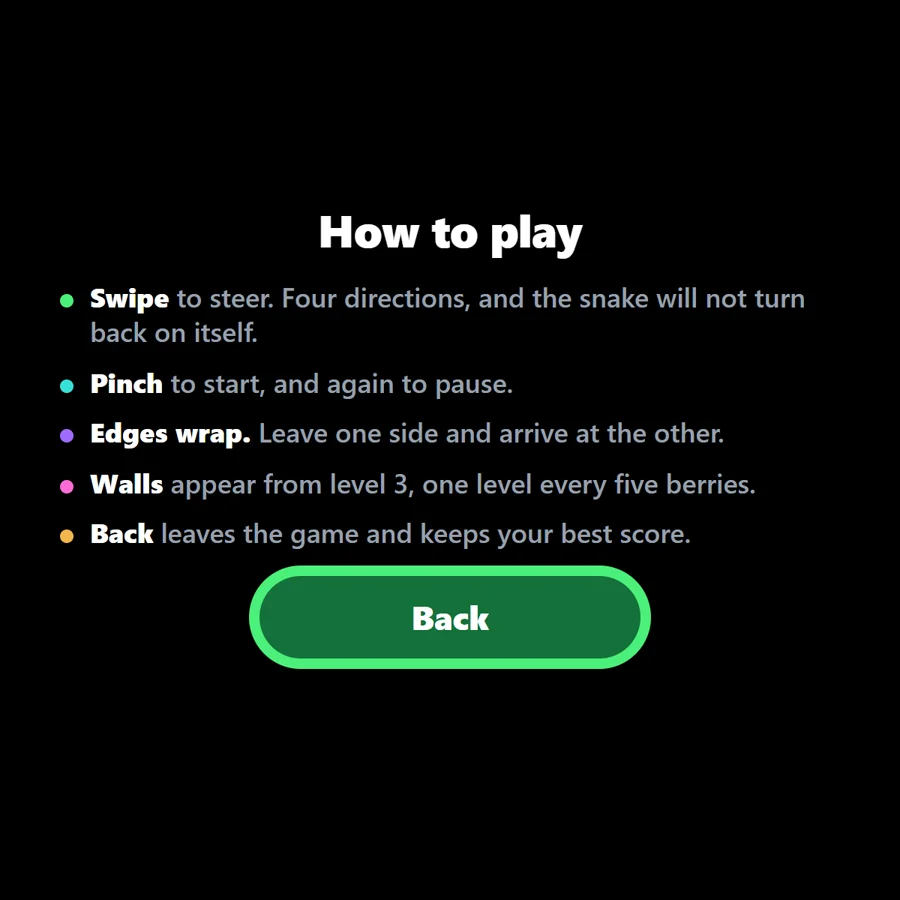
An input layer hardened on the device
Neural Band swipes and pinches arrive as standard arrow and Enter key events. A small navigation layer normalises runtimes that leave the key empty, re-asserts focus on every screen change and saves progress after every change, so the wearer is never stranded and Back always keeps the best score.
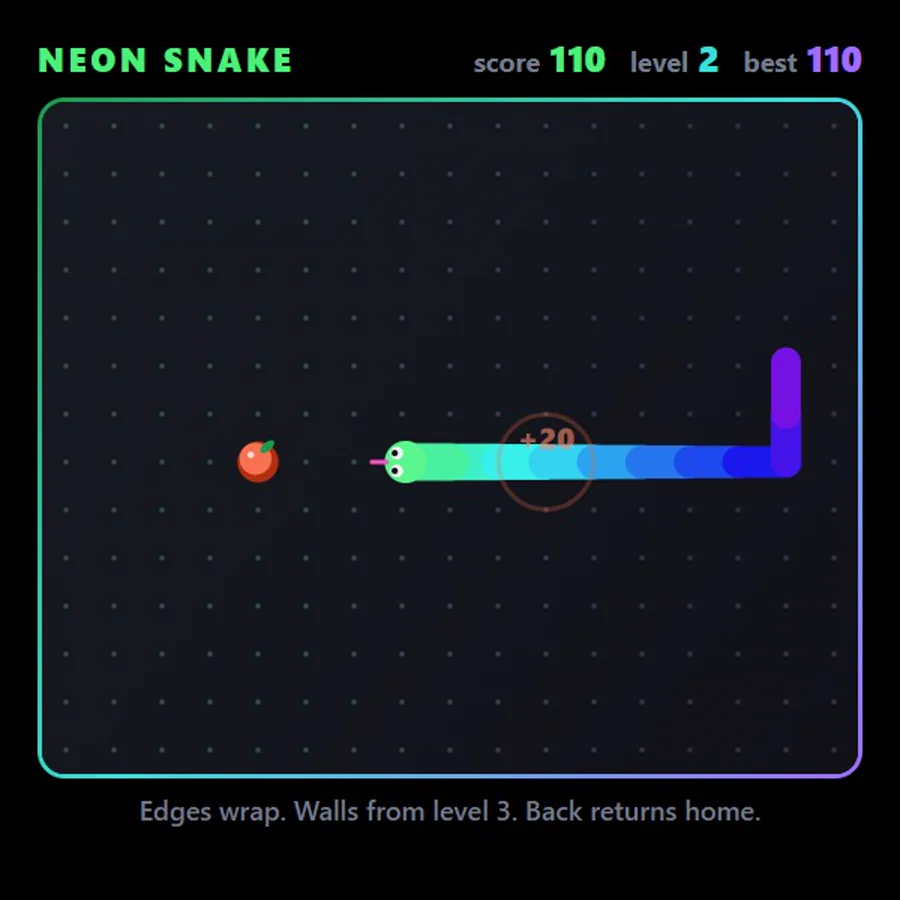
A game clock independent of the render loop
The game runs on its own tick, getting faster as levels rise, and buffers turns between ticks so quick swipes are never lost. Painting stays far inside the frame budget: about 0.3 ms per frame at the 95th percentile, against 33 ms available.
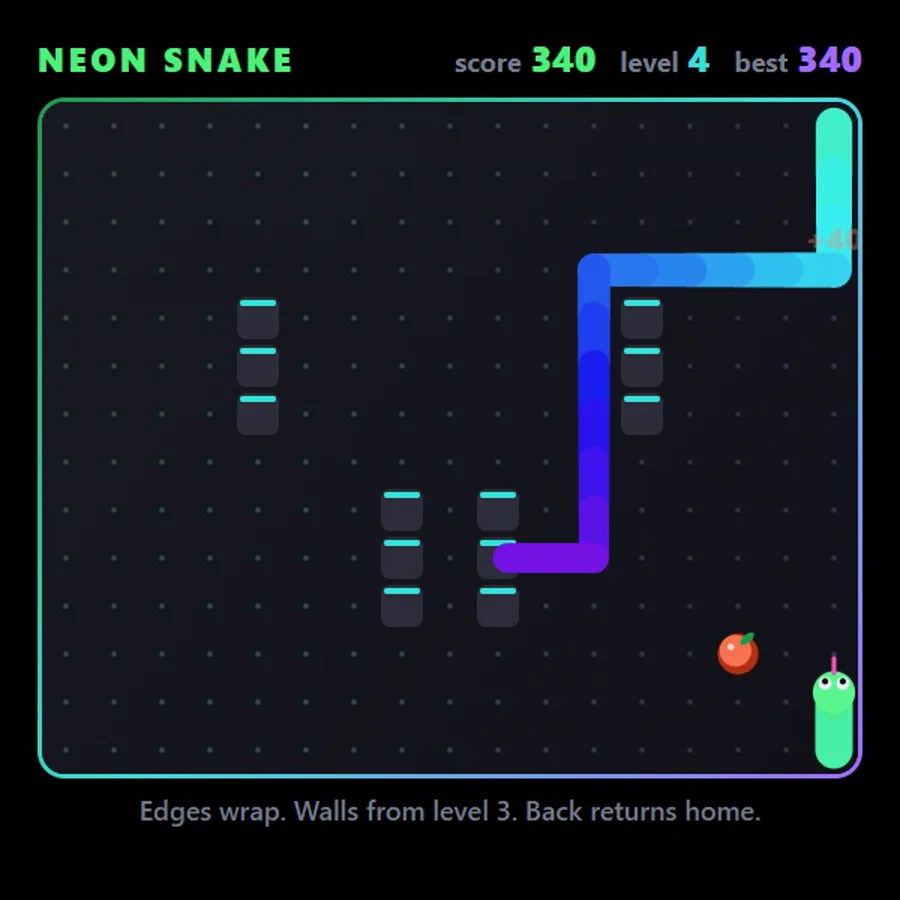
Built for an additive display
An unlit black board disappears on the glasses, so only the neon snake, berries and walls light up over the real world. Edges wrap, walls arrive from level 3, and every state is spelled out in text as well as colour.
03 — THE IMPACT
- native display resolution, 600 × 600
- 600²
- p95 paint time per frame (33 ms budget)
- 0.3 ms
- gestures to play: swipe and pinch
- 2
Paint timing from the game’s built-in frame statistics, measured in a desktop browser.